Thursday, 29 September 2011

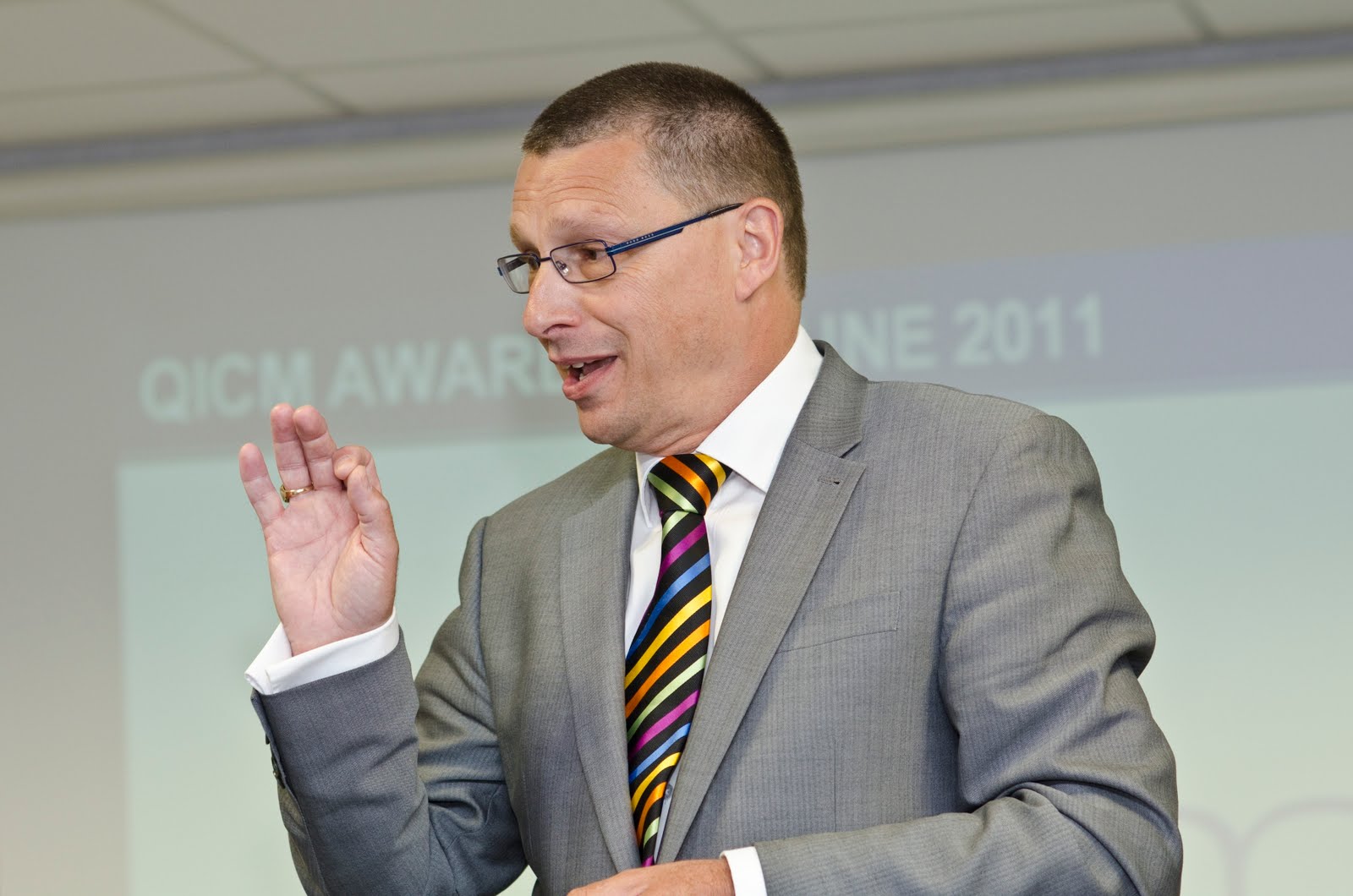
Weekly Blog by Philip King, CEO of the ICM -'Kill or cure the zombies'


On Monday the Financial Times ran a story with the headline "Institutions urged to kill or cure the zombies" which talked about "zombie" businesses, to describe those that can pay interest on their debts but has no viable means of repaying the principal over the long term. The article highlights the fact that many businesses are passed the point of no return but are staying afloat because of low interest rates, HMRC's discretionary Time to Pay arrangements, and/or banks keeping businesses in "intensive care" rather than allowing them to fail. It is little comfort to see a respected newspaper making the very same arguments that I have been saying for at least the last two years in my public assertions that there is a spike of corporate insolvencies waiting just round the corner. I recognise that it has taken longer to reach the corner than I anticipated but I continue to maintain that we are going to see a substantial increase at some point. Too many businesses are in a state of denial and it is only going to take a change in one factor to push them over the edge, be that the rent quarter day this week, a negative response to a request for an extension to the HMRC Time to Pay arrangement, an increase in interest rates, or another factor such as a large customer failing or failing to pay sufficiently promptly.

If you watched Dragons Den this week you might have seen the director of a twenty year old business seeking £100,000 investment to help his business grow. Upon questioning, it became apparent that the business had been loosing money in three of the last four years, had a very low balance sheet net worth and, if current forecasts were met, would be technically insolvent at the end of the current financial period. The argument that sales next year would be much better and would see a return to profit seemed to have little substance and, not surprisingly, there were no takers among the dragons. It's obviously difficult to see the whole picture from a few edited minutes on TV but the scenario of a business thinking tomorrow will be better without realising the reality of its financial situation today is not uncommon.

In the FT article, Christine Elliott, Chief Executive of the Institute of Turnaround said "she would like to see institutions that have potentially viable businesses under their care change their mindset. They should either recognise non-viable businesses and deal with them through insolvency or put in place a transformation plan to achieve their potential". We credit professionals have a very similar task: to recognise viable businesses and help create profitable sales for our own organisations, and to recognise non-viable businesses and ensure exposure is minimised. Sometimes we to have to decide whether to kill or cure the zombies.

Thursday, 22 September 2011

Weekly Blog by Philip King, CEO of the ICM - 'The two 'faces' of Twitter and social media'


During the summer riots, there was much talk of the influence of Facebook, Twitter and other social media sites and their role in helping to organise and promote illegal activity. Last week I was reminded at a much more mundane and practical level of the power of Twitter in my working life.

I woke up last Wednesday morning to see a tweet from Chuka Umunna, the Shadow Business Minister, saying he was going to be speaking at a private members debate on late payment. He included a link to the parliment website and, as I was in the office on Wednesday, I was able to watch much of the debate live. I must confess that I had not realised that such debates took place in Westminster, other than in the main debating chamber itself. This one on late payment had been called by Debbie Abrahams, the Labour MP for Oldham East and Saddleworth, who was clearly passionate - and knowledgeable - about the subject.

The contributions from several MP's we know including Lorely Burt, and others we didn't previously, presented some strong arguments supported by background knowledge that was - in many cases - impressive. What was particularly encouraging was their knowledge of the work being undertaken by the ICM and it was gratifying to receive many mentions.*

Afterwards, I exchanged tweets with Debbie and we are planning to meet to discuss how she and her parlimentary colleagues, along with the ICM, can drive more engagement with the Prompt Payment Code and point SMEs towards the practical advice we can offer through, for example, the Managing Cashflow Guides.

I've also recently had some interesting conversations via twitter with Richard Tyler, Enterprise Editor at the Daily Telegraph, and I'm conscious that - without it - I would have been blissfully unaware of last week's debate and missed a real opportunity to engage with people who can be influential. I know there are downsides to social networking but, for me, the upsides can be pretty impressive too.

*For those interested, our press release following the debate can be found here, the transcript here, and the video recording here.

To follow me and the Institute of Credit Management on Twitter go to http://twitter.com/philipkingicm and http://twitter.com/ICMorg


Thursday, 15 September 2011

Weekly Blog by Philip King, CEO of the ICM - 'Tug of war with no winner'


There has been some interesting press comment recently about the tug of war between retailers and consumers. One article talked about supermarket promotions that 'rip chunks out of the manufacturers' profit margins' and are unsustainable. It talked about the impact of declining consumer confidence and the impact of consumers feeling poorer. Although we all like a bargain, the vicious cycle of more promotions and price-cutting chasing more difficult-to-achieve sales is not good news. And there's worse!

We've seen in the last week reports of double digit falls in year-on-year quarterly sales from the major electrical and homeware retailers and analysts saying the outlook is bleak as people grow more nervous about their financial security and put off purchasing decisions. Add this to the recent spate of insolvencies and it's clear that the retail sector is under huge pressure.

But it's not just retail; industrial output is suffering too, and there is an interesting contrast between the UK and Germany. The Office for National Statistics reported a drop of 0.2% in industrial output in July; in contrast, industrial production in Germany jumped by 4% that was, apparently, way above expectations. It seems that foreign demand is weak and, coupled with a drop in confidence in the business market, things are not looking good.

Matthew Rock, editor of realbusiness, tweeted recently about a meeting with a board director of major energy business and noted a big change in mood over just six months - "they've moved from talking of growth to 'cost review'," he says.

All this bad news made me think about how credit professionals can add value to their businesses when their skills are exploited. Good credit management is about finding ways to do business that otherwise might not be acceptable. In my career, I have often worked with sales teams and others to engineer ways of taking business that we might otherwise have declined.

Now is the time for credit professionals to step up to the plate and help their businesses through what are, without doubt, difficult and challenging times. If you've ever been called the 'Sales Prevention Officer', you can dispel that myth by working closely and creatively with the rest of the business and demonstrating real professionalism.

Thursday, 8 September 2011

Weekly Blog by Philip King, CEO of the ICM - 'feeding the sausage machine'


Rachel Bridge, the Enterprise Editor of The Sunday Times, wrote a really interesting article at the weekend about credit insurance. It talked about a sausage maker in Devon which took out credit insurance a few years ago after suffering a bad debt of £22,000. The finance director was quoted as saying that "if our credit insurer will provide cover up to a certain limit, then we will trade. If not, we will think again. We either do not do business with that customer, or we trade on different terms, perhaps asking for money upfront".

The article went on to outline how the amount of cover provided by the big three insurers has increased over the past year, and how some have introduced new measures and more user-friendly policies. Fabrice Desnos, Xavier Denecker, and Marc Jones from Euler Hermes, Coface, and Atradius respectively were all quoted and - since all three are good friends of the ICM - it made me read the article more carefully.

It was a useful and practical guide to what is a difficult product for many SMEs to understand and, indeed, for government ministers to get their heads around. I remember many conversations a couple of years ago trying to explain how credit insurance works without ever feeling I was making much progress. Credit insurers were coming in for some pretty bad press at that time, some of it deserved, but the sector has moved on, and so too its products. Credit insurance in the right circumstances can be a really useful tool for business, including small ones, and I'm pleased to see it being explained by a respected journalist to whom SMEs will listen.

There's been a recent interesting debate on the ICM Credit Community LinkedIn group about whether credit managers who have no bad debt are the good ones. My view is that good credit professionals understand the balance of risk and reward and accept bad debts as a price of profitable sales activity, but that doesn't alter the fact that the impact of a bad debt - particularly to small businesses and especially if it is relatively disproportionate - can be devastating. Anything that helps SMEs to understand better how to manage credit and risk is to be welcomed.

Thursday, 1 September 2011

Weekly Blog by Philip King, CEO of the ICM - 'The majority are micro'


Ed Davey issued a discussion paper last week - "simpler reporting for the smallest businesses" and I make no apology for using my blog this week to readdress some of the issues raised in the press release we issued immediately after the discussion paper was received.

The paper considers whether micro businesses should be allowed to file a simplified trading statement, statement of position, and annual return in place of the current profit and loss account, balance sheet, and annual return. So far so good; making reporting easier will surely reduce the burden on smaller businesses.

But wait. What has the EU defined as a micro business? Micro businesses are those who do not exceed two of the following criteria; a net turnover of Euro 500,000 (£440,000) a balance sheet of Euro 250,000 (£220,000), and an average of ten employees during the financial year. 60% of companies registered at Companies House meet these criteria so it isn't a 'small minority' by any measure.

The paper raises a number of interesting questions and I am looking forward to receiving feedback from ICM members when we launch a survey seeking their views. The move to a trading statement prepared on a cash accounting basis which would remove the need to account for, among other things, stock, changes in working capital, and changes in the value of fixed assets raises a number of questions in my mind (although I'm always prepared to admit that I might be out of date).

My biggest gripe, however, is with the definition of users of accounts which, among the six categories, doesn't even mention creditors except under the quaint term of "other trading counter parties". It is this that suggests to me a complete lack of understanding of the role of credit. A business turning over £440,000 is typically going to make sizeable purchases and, for the majority, these will be on credit terms. Credit professionals provide by far the biggest proportion of cash flow funding to business and, to make good decisions, they need good information.

The discussion paper and survey will be with you shortly; please look out for it and give us your feedback. We need to make sure our ability to support economic recovery is not undermined.

Thursday, 25 August 2011

Weekly Blog by Philip King, CEO of the ICM - 'Joined up thinking benefits customer'


I recently experienced, at close hand, the efforts of the police, local authorities, and other agencies attempting to work together to protect a vulnerable child. What it demonstrated to me is that acting independently creates frustration for all those involved or affected, prevents the best outcome being achieved and, indeed, stands in the way of getting the required result.

The same could be said of business. In far too many businesses we hear about the 'them and us' attitude that exists between sales and credit departments and how neither party is at fault when something goes wrong.

Take for example my own experience last week when I checked into a hotel ahead of the ICM Regional Roadshow in Sheffield. It was late and I was tired. I took the lift to the fourth floor only to find that the key card wouldn't open the door to room 411 (a not unusual occurrence in my experience) so I returned to reception and had the key card re-coded. The new key worked perfectly but as I stepped into 'my' room I realised from the bags on the bed and the clothes on the floor that somebody had got there first.

I returned to reception and was moved to a new room that was mercifully vacant. On my third visit to the Reception desk, I asked the very pleasant young lady why she didn't feel the need to apologise for the inconvenience I had been caused. Since the card coding machine malfunction wasn't her fault, and someone else had made the error that resulted in me being booked into an already occupied room, it was clear - in her mind at least - that there was nothing for her to apologise for!

Wherever we sit in an organisation, but especially as credit professionals, when we communicate with customers, suppliers or any other stakeholder, how we respond reflects on our business and how it is viewed. As Glen Bullivant reminded us at the Sheffield Roadshow last week, credit management - whether we like it or not - is customer service because we face the customer, we talk to the customer, and we manage the customer. Doing it well, and working effectively with all other parts of the business, is just one way in which we add real value. I'm reminded that someone once said: 'There's no pleasure in knowing the hole is in the other end of the boat'.

Oh, and if you were in room 411 at the Park Inn, Sheffield last Wednesday, you had a very lucky escape!

Thursday, 18 August 2011

Weekly Blog by Philip King, CEO of the ICM - 'Pride in Professionalism!'


A couple of weeks out of the office and I'm back raring to go. I looked at only a few emails, turned off Twitter and was generally very well behaved - I think even Mrs K was surprised! While I was absent, I gave away my daughter on her wedding day which was as perfect as we could have hoped for, spent a few days in the North West of England, and watched the world going mad. Riots in London and elsewhere, the US economy being downgraded, and a possible European financial meltdown as just a few examples. So back to reality and I've decided not to join in the bigger debates that have been going on while I've been away since all the arguments have already been expressed and in better words than I can use.

I do want to share some thoughts on professionalism though. The Institute of Credit Management (ICM) delivers cash for business by empowering credit professionals working in those businesses to be more effective, and a couple of emails received from ICM members during my holiday reminded me of just how important the credit management role is. Members of the ICM are professionals working in the field of credit management who recognise the importance of what they do and are keen to develop their own knowledge and careers, whether that is through qualifications, training courses, keeping up-to-date through reading Credit Management magazine and ICM Briefings, attending regional networking events, participating in online forums, or engaging in other ways. In short, they are showing pride in being professional by belonging to an organisation that supports them, works for them, and encourages them.

And yet I meet many people working in credit management who, although they recognise the value they add, don't see it as a profession in its own right. Many of us would argue rightly that it is a challenging, rewarding and worthwhile profession, and needs to be seen as such. We have made significant strides in recent years in gaining recognition but we need to do more. The new Continuing Professional Development scheme the ICM is piloting is an example. More important though is getting those of us who do the job to make sure our peers and business colleagues (above and below) understand that we're working in a profession we're proud of and is vital to the sustaining and growth of business and the economy.

If you know someone who's working in credit management and hasn't yet got round to joining the ICM, give them a nudge or send me their details and I'll nudge them. The more members we have, the louder our voice will be and I'm on a mission to raise the volume - let's get all credit professionals to show Pride in Professionalism!